

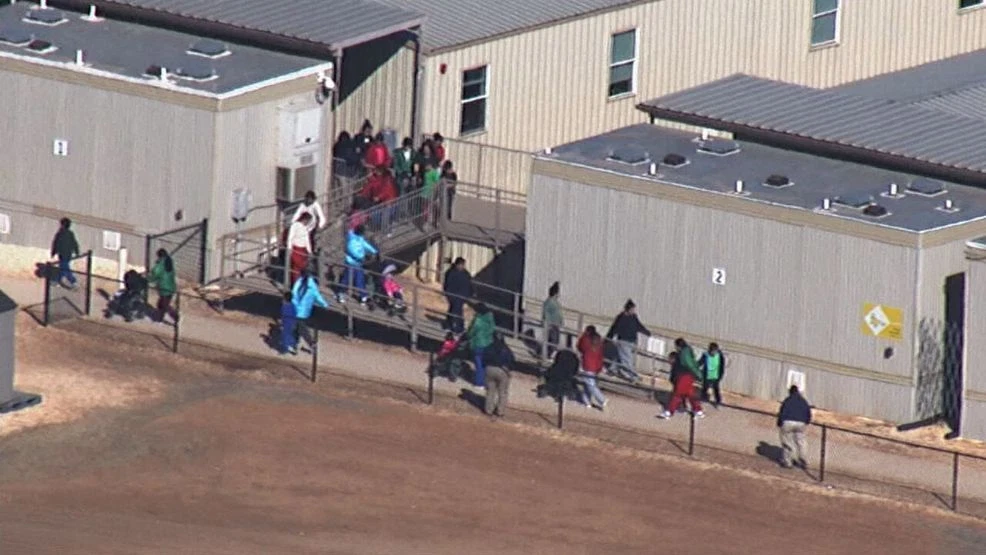
With the rapid rise of Immigration and Customs Enforcement (ICE) Detention Centers in the U.S., many have started to take note of what could really be going on behind the scenes—with various reports indicating detainee harassment, poor living conditions, and the lack of basic resources. Certain instances have led to mass media attention, allowing those to look further into these centers, while providing us with real stories day to day. As of now, 150+ ICE detention centers currently stand in the U.S., with many more being added along the way (Nolo). Notable detention centers like the Dilley Immigration Processing Center in southern Texas and the Dade-Collier center (better known as ‘Alligator Alcatraz’) in southern Florida have even been described as “inhumane” from previous workers, deeming these locations as “controversial” online (AOL). Although many of these concerns have resurfaced around the U.S., the Trump Administration has remained adamant on funding these detention centers. On the brink of public discontentment and outrage, people still wonder if any intervention will be observed at all—and if so, when?
Overall conditions of the centers:
Embedded in the INS Detention standard (or ICE’s general policy), detainees are provided with food, bedding, clothes, and are given special accommodations as needed—which is to be expected, right? However, this couldn’t be further from the truth. In actuality, many of the detainees have all encountered similar experiences— mold being found in their food, fiber glass hidden within their sheets, and poor materials used for their clothing (The Texas Tribune). This alone has posed a significant risk towards their health, with the possibility of detainees facing underlying illnesses and even death. According to a 16-year old detainee at the Dilley Processing Center in southern Texas, they revealed how “the food ha[d] mold in it”, even “see[ing] actual worms” in different dishes before (The Texas Tribune). Other dangerous material has also been identified in detainee bedding, with individuals picking the floor or a bench to sleep on as an alternative instead. As a result, most detainees have reported back/other physical complications towards staff, with little to no assistance, being forced to endure constant pain. Disabled detainees have also faced the worst of these detention centers, denied the basic accommodations that were initially granted in the Department of Homeland Security (DHS), Customs and Border Protection (CBP) and the Immigration and Customs Enforcement (ICE) guide. Jose Ruiz Canizales, a deaf detainee at a California detention center, explained to reporters how he felt “completely isolated” when he tried to communicate with the staff, interacting with an interpreter at the facility “only once” (ACLU).
Mistreatment/repeated neglect:
More concerning elements regarding these detention centers have been brought forth towards the media, specifically highlighting the treatment of women and adolescents in these spaces. s/adfAs mentioned before, many of the rights that are guaranteed to detainees are rarely taken into account and, therefore, are disregarded. Newer reports have provided insight on the lack of medical aid as well as the increase in assault/abuse cases in each of the detention centers. In one instance, a Colombian detainee by the name of Angie Rodriguez was refused medical attention for the entirety of her stay at the Mesa Verde ICE Processing Center in Bakersfield, California. Despite the workers being aware of her pregnancy, Rodiguez was still given smaller meal portions, mentioning how “foul” the food would smell. After a month she miscarried, telling those around her that “this is happening to me and other women”(Reproductive Rights). Like Rodriguez, many women are subject to face the same exact realities—suffering through immense trauma and fear daily. In addition, physical assault and aggression has also been reported at facilities, with numerous detainees speaking out against the guards’ inappropriate behavior and intimidating demeanor/s. Samuel, a 19-year old boy, explained to the American Civil Liberties Union (ACLU) how one officer “forced his fingers deep into [his] ears” after an altercation. This significantly damaged his hearing. Relating to this behavior, it’s noticed in most stories that detainees are being “manhandled” by staff, whether or not it’s pinning an individual to the ground or even wrapping their hands around their neck. With this normalization of abuse and encouraging attitudes towards violence, safety in these detention centers remains questionable, abiding to the description of an “inhumane” environment.
Noticing the Trump Administration’s willingness to keep these facilities up and running, it’s understood that these issues are still going to persist—even proving to be worse now than ever before. In the heated state of our political climate, it’s extremely important to keep track of cases like these, even advocating on behalf of the many silenced voices that are still out there. It’s one thing to be notified, but having an educated point of view goes a long way. If something seems slightly off, say something–no matter what. Whatever it may be, your actions could change something for the better, for you and everyone else.